Fortigel®
147 athletes with joint pain were divided into two groups: one took FORTIGEL® and the other took a placebo. After 24 weeks, the FORTIGEL® group showed a significant reduction in joint pain compared to placebo. - Link to the study
3 athletes with damaged cartilage in the knee and ankle were given FORTIGEL®. As a result (based on MRI imaging), joint surfaces were restored and joint health and mobility improved. - Link to the study
In a double-blind, placebo-controlled study, 30 individuals with knee joint damage received FORTIGEL® daily for 48 weeks. MRI scans showed a significant increase in cartilage density. - Link to the study
In a study of 160 young adults with physical-activity–related knee pain, participants received FORTIGEL® or a placebo daily for 12 weeks. After 6 weeks, the FORTIGEL® group showed significant improvements in pain, stiffness, and physical function, with further improvement after 12 weeks. - Link to the study
Tendoforte®
A study with 20 participants with chronic Achilles tendon injury involved daily intake of 5 g of TENDOFORTE® and a specialized exercise protocol for 6 months. After 3 months, 12 participants started running again, and the benefits persisted even after a 3-month break, suggesting long-term effects. - Link to the study
A study in 50 people with ankle instability showed that a daily intake of 5 g of TENDOFORTE® for 6 months, compared to placebo, significantly improved ankle stability during everyday activities and sports and reduced the number of injuries. - Link to the study
Collagen
Collagen alleviates symptoms of knee cartilage wear (osteoarthritis) and is very well tolerated. - Link to the study
A double-blind, placebo-controlled study showed that collagen peptides have potential in treating cartilage wear (osteoarthritis) and maintaining joint health. - Link to the study
Collagen peptide supplementation combined with exercise improves joint function, reduces pain, improves body composition, muscular strength, and recovery. - Link to the study
Collagen is a key component of cartilage and may play a crucial role in its regeneration. - Link to the study
Collagen peptide supplementation reduces pain and improves joint function. - Link to the study
Collagen products rich in collagen peptides significantly improve skin hydration, elasticity, and appearance, including wrinkle reduction, compared to placebo. - Link to the study
Glucosamine and Chondroitin
Chondroitin and glucosamine may help with cartilage wear (osteoarthritis), as they may support cartilage repair and help rebalance the ratio between cartilage formation and breakdown. - Link to the study
A meta-analysis of studies lasting 12 months or longer found a statistically significant effect on cartilage volume with chondroitin and glucosamine use. - Link to the study
Glucosamine
A meta-analysis of 17 randomized, double-blind studies with glucosamine sulfate found a small but statistically significant reduction in pain. - Link to the study
In addition to its direct structural role, glucosamine also shows anti-inflammatory effects, which may reduce osteoarthritis progression and alleviate symptoms. - Link to the study
Chondroitin
In addition to its direct structural role, chondroitin also shows anti-inflammatory effects, which may reduce the progression of cartilage wear (osteoarthritis) and alleviate symptoms. - Link to the study
Chondroitin may produce a mild but significant short-term reduction in osteoarthritis pain. - Link to the study
A meta-analysis of 18 randomized controlled trials found a mild but statistically significant reduction in pain and a small improvement in physical function with chondroitin use. - Link to the study
Curcumin
Turmeric extract significantly reduces knee pain and improves physical function compared to placebo, with effects comparable to anti-inflammatory drugs. Turmeric also has 12% fewer side effects than anti-inflammatory drugs. - Link to the study - Link to the study
Curcumin can significantly reduce symptoms of cartilage wear (osteoarthritis), including pain, compared to placebo, with effects comparable to drugs such as ibuprofen. - Link to the study
Curcumin may be an effective adjunct to traditional osteoarthritis treatment. - Link to the study
The combination of curcumin and boswellia significantly improved pain and joint function compared to placebo. - Link to the study
Turmeric and ibuprofen produced similar results in reducing pain and improving joint function. - Link to the study
Curcumin led to a significant reduction in pain in patients with knee osteoarthritis, especially in those with high baseline pain levels. - Link to the study
Curcumin and diclofenac (a pain medication) were both effective in improving pain and quality of life in people with knee osteoarthritis. - Link to the study
Curcumin was safe and effective in alleviating osteoarthritis symptoms. - Link to the study
Curcumin significantly improved osteoarthritis symptoms and reduced pain compared to placebo. - Link to the study
Curcumin is effective in reducing pain and may be comparable to commonly used medications such as paracetamol (acetaminophen). - Link to the study
Curcumin helps reduce levels of certain inflammatory markers in the body, which may be useful in preventing chronic diseases. - Link to the study
Curcumin significantly reduces pain and improves knee function compared to placebo. - Link to the study
According to a meta-analysis, curcumin is more effective than pain medications at reducing pain and improving knee function. - Link to the study
Curcumin improves knee pain and function similarly to pain medications. No serious side effects were reported in any of the studies. - Link to the study
Curcumin helps reduce levels of certain inflammatory compounds in the body, which may help in treating chronic inflammation. - Link to the study
Curcumin supports muscle recovery by reducing soreness and inflammation and improving antioxidant capacity. - Link to the study
Piperine
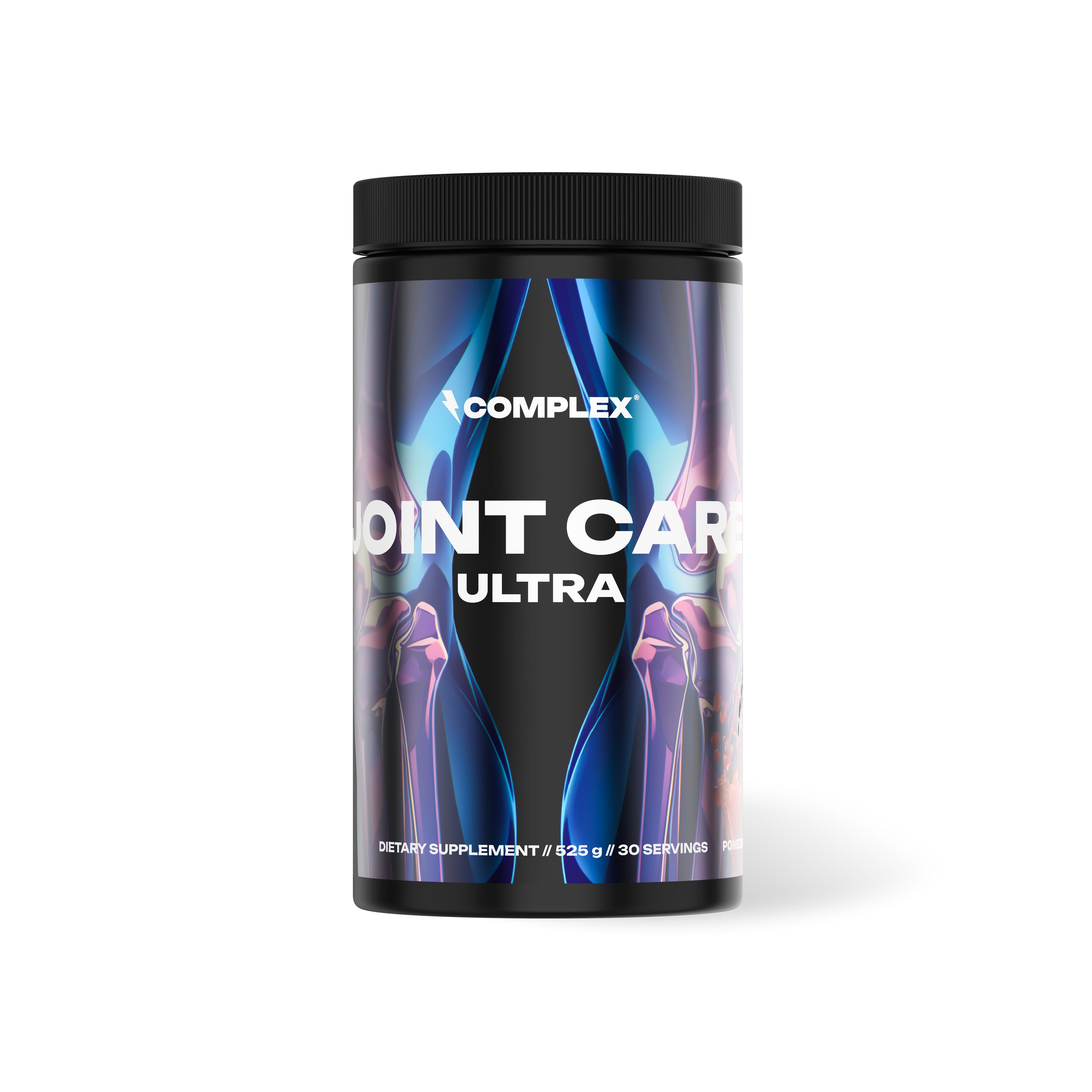
Piperine, the active compound in black pepper, increases the absorption and bioavailability of various nutrients in Complex™ Joint Ultra Care—especially curcumin—by up to 20×!
Link to the study
MSM
MSM reduces pain and improves knee function in people with cartilage damage (osteoarthritis) without causing side effects. - Link to the study
MSM provides positive evidence for treating mild to moderate knee osteoarthritis. - Link to the study
MSM supplements may improve inflammation, joint/muscle pain, oxidative stress, and antioxidant capacity, without side effects. - Link to the study
MSM may be effective in reducing cartilage degradation in mouse models of osteoarthritis, but high doses may cause organ atrophy. - Link to the study
Vitamin C
Vitamin C supplements may have potential in preventing osteoarthritis, but more high-quality studies are needed to confirm its effectiveness in treatment and prevention. - Link to the study
Vitamin C may improve bone health and tendon healing, reduce post-surgical pain, and help prevent complex regional pain syndrome after orthopedic procedures. - Link to the study
Adding vitamin C to dietary supplements may help alleviate knee osteoarthritis symptoms and improve quality of life in young people with early-stage osteoarthritis. - Link to the study
Hydrolyzed collagen supplements enriched with vitamin C may improve collagen formation. - Link to the study
Vitamin C helps maintain optimal collagen density in the skin. - Link to the study
Vitamin C supports skin health by stimulating collagen production and helping protect against UV-induced damage. - Link to the study
Boswellia Serrata
Boswellia serrata appears to reduce pain, likely due to the active compound AKBA, which inhibits an enzyme responsible for inflammation. - Link to the study
A 2020 meta-analysis of 7 randomized controlled trials found that men and women with joint damage experienced improvements in joint pain, stiffness, and function after 4 weeks of Boswellia serrata supplementation. Even greater pain reduction was observed when BS was taken for 12 weeks. - Link to the study
Boswellia serrata supplementation has a beneficial effect on symptoms in patients with knee joint damage. - Link to the study